Deep Value by Tobias E. Carlisle
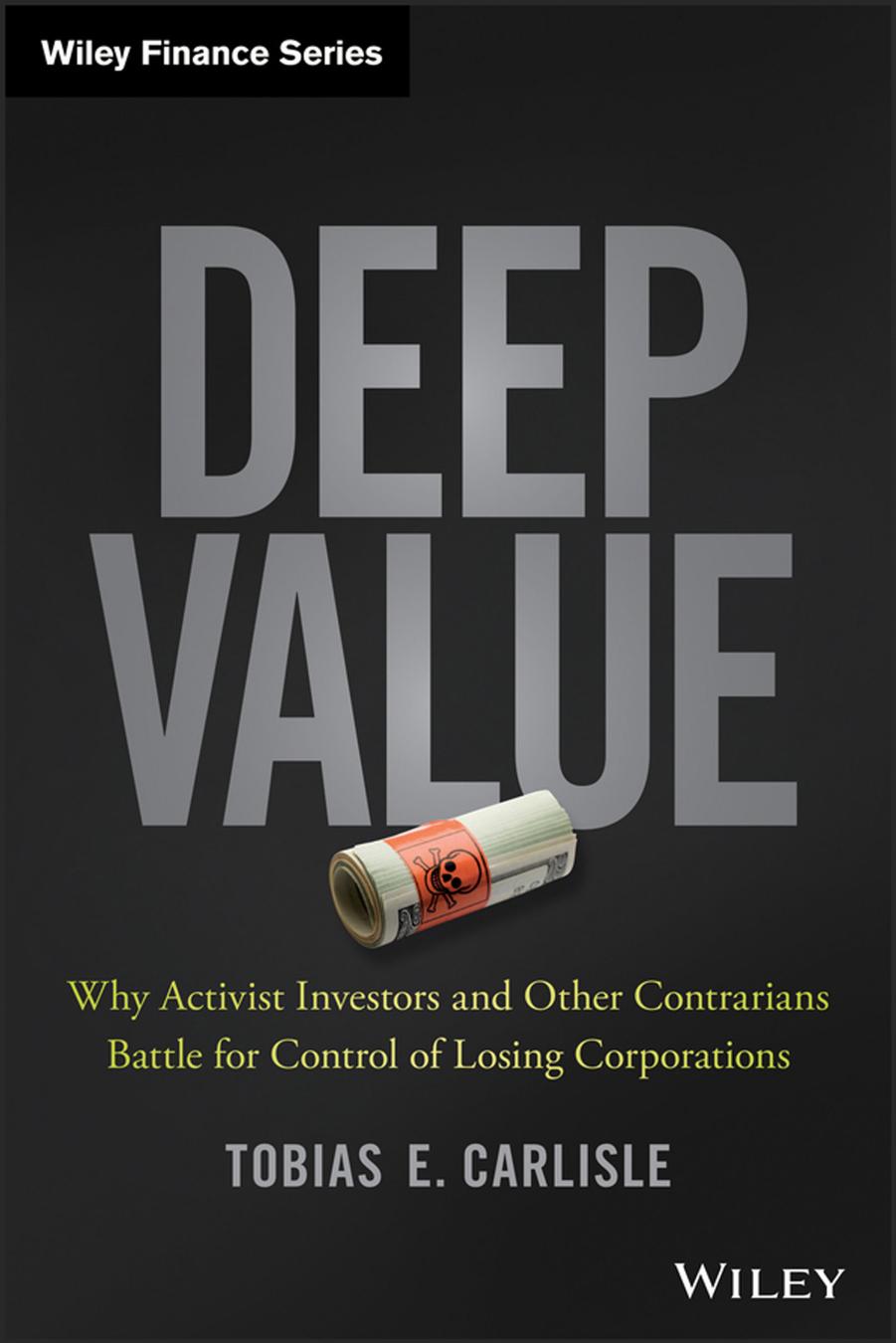
Author:Tobias E. Carlisle
Language: eng
Format: epub, pdf
ISBN: 9781118747858
Publisher: Wiley
Published: 2014-07-15T00:00:00+00:00
Critics charged that Litton’s true skill rested not in high technology, but in publicity and investor relations.23 They also noted that Litton was adept at the use of unusual—although not illegal—accounting techniques that obfuscated the true state of the businesses and exaggerate its growth.24 Refusing to let the dream die, one of Litton’s executives said in 1968, “There is no question in anybody’s mind that Litton is going to be a successful large company, but our objective is to be a successful large growth company.”25 It was too late. The market had seen the man behind the curtain.
It is remarkable that it took so long for the investment community—financial analysts, investment bankers, the business-owner vendors, and professional investors—to understand the simple game performed by the conglomerateurs: Use overpriced stock to buy businesses at a price that allows for growth in earnings per share; promote the growth as a manifestation of managerial skill, and the result of high technology; rinse and repeat. The metric missing from the discussion was the intrinsic value given up and received in each merger. In his shareholder letters, Warren Buffett counselled that managers should consider whether they would complete a sale of their company in its entirety on the same terms as they proposed to complete the sale of a portion of the company, which was the economic reality of a merger.26 If the transaction amounted to the sale of $2 of the acquirer’s intrinsic value in exchange for $1 of the target’s intrinsic value, even if it was accretive to earnings per share, they should ask themselves if it was a worthwhile transaction.27 Part of the confusion arose from the language used to describe the dilution of earnings per share in such mergers, which tended to obfuscate rather than clarify the exchange of intrinsic values:28
The attention given this form of dilution is overdone: current earnings per share (or even earnings per share of the next few years) are an important variable in most business valuations, but far from all powerful. There have been plenty of mergers, non-dilutive in this limited sense, that were instantly value destroying for the acquirer. And some mergers that have diluted current and near-term earnings per share have in fact been value-enhancing. What really counts is whether a merger is dilutive or anti-dilutive in terms of intrinsic business value (a judgment involving consideration of many variables). We believe calculation of dilution from this viewpoint to be all-important (and too seldom made).
Download
This site does not store any files on its server. We only index and link to content provided by other sites. Please contact the content providers to delete copyright contents if any and email us, we'll remove relevant links or contents immediately.
The Brazilian Economy since the Great Financial Crisis of 20072008 by Philip Arestis Carolina Troncoso Baltar & Daniela Magalhães Prates(369220)
International Integration of the Brazilian Economy by Elias C. Grivoyannis(111636)
The Art of Coaching by Elena Aguilar(53707)
Flexible Working by Dale Gemma;(23365)
How to Stop Living Paycheck to Paycheck by Avery Breyer(19839)
Thinking, Fast and Slow by Kahneman Daniel(12549)
The Acquirer's Multiple: How the Billionaire Contrarians of Deep Value Beat the Market by Tobias Carlisle(12438)
The Radium Girls by Kate Moore(12210)
The Art of Thinking Clearly by Rolf Dobelli(10736)
Hit Refresh by Satya Nadella(9267)
The Compound Effect by Darren Hardy(9173)
Tools of Titans by Timothy Ferriss(8618)
Atomic Habits: Tiny Changes, Remarkable Results by James Clear(8534)
Turbulence by E. J. Noyes(8231)
A Court of Wings and Ruin by Sarah J. Maas(8127)
Change Your Questions, Change Your Life by Marilee Adams(7943)
Nudge - Improving Decisions about Health, Wealth, and Happiness by Thaler Sunstein(7866)
How to Be a Bawse: A Guide to Conquering Life by Lilly Singh(7635)
Win Bigly by Scott Adams(7354)
